Tuesday, October 3, 2017

Anaconda (mostly by Vicki Rains)

The Deer County Courthouse in Anaconda
Next we traveled to Anaconda, MT.  In my trip planning I was intrigued by the descriptions of this revitalized Victorian town.  Little did I know the real story until we came to stay there.  The town of about 5000 people is actually quite lovely and I really enjoyed my daily dog walks along the creek in the city park through town.  (But "revitalized" might be a somewhat optimistic description for Anaconda. -RR-)

Anaconda was founded by Marcus Daly, the copper magnate whose mansion we toured back in Hamilton while we were staying in Darby.  You can find that blog
Combination City Hall and fire station (now tourist shops)
here. He built a copper smelter alongside Warm Springs Creek to process the ore mined in Butte, MT, located about 20 miles SE of Anaconda.  The smelter promptly started churning out slag and, I suppose, copper.  The copper is gone, but the slag remains.  Lots and lots of it.  Unfortunately, we never got around to taking a picture of the slag, so you'll just have to take our word for it.  There was a lot of slag.  The Anaconda Company boasted that the smelter's smoke stack was the largest masonry structure in the world & the processing plant was the largest of its kind.  They did not mention any records set by the slag heap. 

City library
The Atlantic Richfield Company bought the plant in 1977 and then promptly had to close it down due to falling copper prices. They were hoping to acquire a profitable mining operation  but instead they just got stuck with the responsibility for the large scale hazardous waste contamination of the area.  The Environmental Protection Agency and a lawsuit required that ARCO spend millions of dollars to clean up the area as a Superfund Site.  After 30 odd years the conditions are much improved.  The creek is now clean enough that fish can almost live there.  By 2050 you'll probably be able to catch trout in Warm Springs Creek (but I wouldn't eat them).


The smoke stack is all that's left of the smelter
Mine head-stock in Butte
We drove down to Butte, MT to see the mining museum hoping to learn more about copper mining, which mostly ended in Butte in 1983.  The museum turned out to be a display of old buildings brought in from around the area, and arranged to represent an old mining town.  It certainly gave one the feel for what it would have been like to live in Montana around 1900 but taught us effectively nothing about mining. 

What distinguishes Butte from other mining towns is that its mining operations were placed right in the residential areas.  One can still see the head-stocks of the old mines throughout the older part of the city sticking up between the buildings, making the environmental consequences all the more apparent, as you shall see.
Real turn of the century buildings in a fake mining town

"Victoria's Rooms" in mining town


The Berkely copper mining pit
We decided to take a look at the Berkeley Pit, site of decades of copper mining.  Open pit mining was started in the mid 1950s, stopped in the 1980s, restarted for awhile, stopped in 2000 and restarted again in 2003.  The pit is now filled with contaminated water chock full of toxic heavy metals.  A water decontamination plant was built in the 1990’s but can’t operate fast enough keep up with the growth of this lake of poison.  A sign at the pit says that the Berkeley Pit water won’t reach the drinking water tables until 2023, another 6 years, but that they should be able to take care of the problem by then. Maybe, but I don’t think I want to move to Butte any time soon.

Phillipsburg
From Anaconda we took another day trip along MT Hwy 1 to Phillipsburg, another quaint old mining town, but without the tumultuous history or massive pollution.  We're not sure exactly what they produced here but whatever it was it is gone.  The early 20th century buildings appear mostly unchanged in the last century.

Mount Haggins Wilderness Area
The Osprey
We also took a day trip down to the Big Hole River through the Mount Haggins Wilderness area.  The area was lovely although we didn’t see a lot of wildlife on our drive.  There was one Osprey nest along he highway, but when we approached it the bird took to the air, so the pics are marginal at best.

Before we left the area we visited Lost Creek State Park.  It was in a lovely little canyon close to Anaconda.  It had a lovely little waterfall but there was hardly anyone there to enjoy it.  Their loss.

The waterfall at Lost Creek State Park

Tuesday, September 19, 2017

The Gates of the Mountains


The Helena tourist train
Back in 1864 Americans other than the Mountain Men were just starting to arrive in Montana Territory.  Four Georgians had come out to seek their fortune and had prospected together all over the Eastern slopes of the Rocky Mountains without success and were ready to head home.  They decided to give it one last shot, panning for gold in Prickly Pear Creek in the middle of nowhere.  They agreed that if this did not work out, they would give up and head back to Georgia.  It turned out to be a good decision.  They found gold in the creek, which they renamed Last Chance Gulch.  This placer deposit eventually produced $243,000,000 worth of the yellow metal (3.6 billion in current day dollars) and Last Chance Gulch became the main street of Helena and triggered a major gold rush.  The four Georgians had the good sense to quit panning and go into business supplying necessary goods to other hopeful miners, becoming fabulously wealthy in the process and turning Helena into a territorial business hub which allowed the town to keep going a few years later when the gold started running out instead of just shriveling up like most mining towns.

Victorian Mansions 
By 1888 there were over 50 millionaires living in Helena, more per capita than any other city on earth.  They built luxurious homes in town that mostly survive to this day.  We decided to take a train tour of the city to see the capitol and a smattering of these fancy mansions, the Cathedral and Last Chance Gulch/downtown. The "train" ran on rubber tires and pulled 4 small, open air cars.  It’s not quite clear to me why they needed to have a “train” engine pulling us through the town.  Maybe it is to keep the little kiddies interested, but I don’t remember any little kiddies on our tour. 

Our favorite bit of information on the tour was concerning the election to pick the capital city of Montana.  Helena had been the capital of the Montana Territory and wanted to keep that distinction after statehood arrived, but so did every other little gimcrack town in the territory.  There were initially 7 towns in the running and an initial ballot narrowed it down to Helena v.s. Anaconda.  In the run off election there was bickering, bribery and double dealing but in the end Helena squeaked by with a margin of 50 some odd votes.  Now there is an old house in the city that was recently renovated and in the basement they discovered a walled up room.  In the room they found the ballots for that election.  When historians counted those ballots, Anaconda rather than Helena actually won the election.  At least that is what the tour guide told us.  An hour of internet research failed to find any corroboration for this version of events, so take it for what it is worth.

Every state seems to have a historical museum in its capital city and Montana is no exception so we thought we’d take a look.  The front door was just in front of us as we got off the train, but it was
Western art and guns.  Fishing gear was popular as well.
disabled when we got to it so we had to go around the building to the back.  Inside we found some western art and an array of guns, but as state museums go it was fairly disappointing. 
Bison skull sculpture outside the state museum
Montana State Capitol building
Across the street was the state capitol building, which looks like a state capitol building.  On top of the dome is a statue that arrived from back east while the building was going up in 1901.  It was a female figure with no explanation.  Any records of the statue being ordered had been lost.  They contacted the
Miss Montana
company in Philadelphia, but its office with all of its records had burned and they didn't know what it was.  The capitol builders shrugged, stuck it on top of the dome and called it "The Spirit of Liberty", which was its name for 100 years.   Then, in 2004, a woman called and asked out of idle curiosity whether her grandfather's statue was still sitting on top of the capitol dome.  It turned out the piece was made by Edward J. Van Landeghem who had actually named the figure "Montana".  Thirteen years later state politicians are still patting themselves on the back over that.

Helena, like much of Montana, is growing which one can see by all the new buildings in the surrounding county of over 70,000 people.  But much of the downtown, like many US cities, is dying.  The local mall is closing and there are lots of empty storefronts.  The towns main business is politics with 6 of 10 jobs in town being related to state, county or city government.  Education, tourism and a little industry follow at a distance.

A peaceful cruise up the Missouri River at Holter Lake
This year part of our historical quest has been to check out the path of Lewis and Clark on their way to the pacific.  It has not been our intent to follow it in order, but to pick up bits of it as we travel in our somewhat irregular path across Montana and the Dakotas. From Helena we visited the Gates of the Mountain, originally named by Meriwether Lewis in 1804. They were canoeing the Missouri River to find the Northwest Passage to the Pacific. The river at this point has been dammed so we
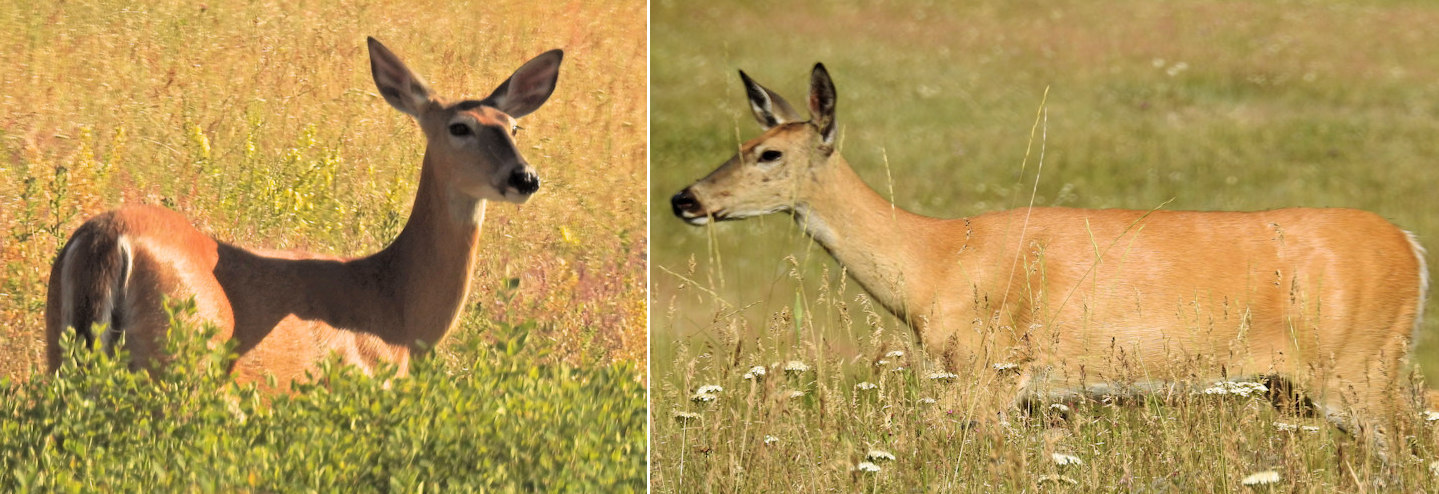
Deer on the river bank
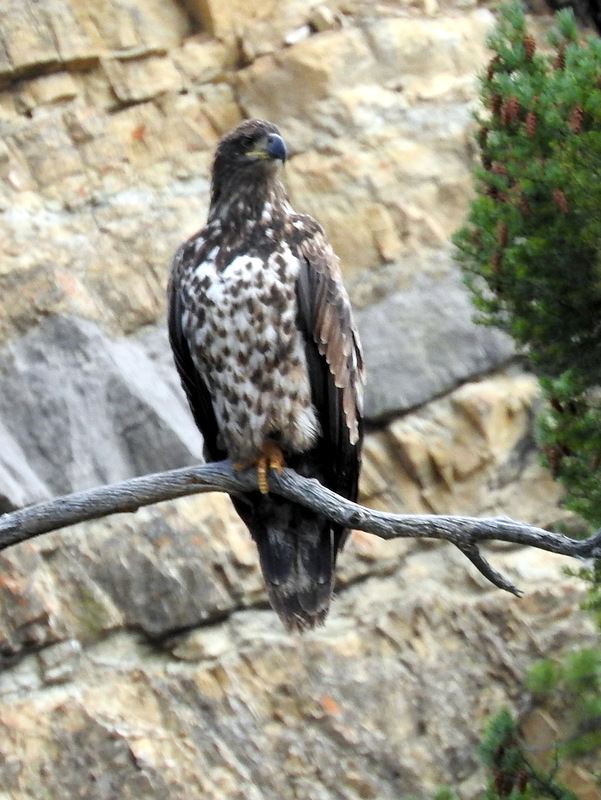
got to go on a gentle boat ride, rather than bumpy rapids, through this lovely canyon, taking pictures of the wildlife and the high canyon walls.  The canyons supported a significant bald eagle population and I got to see my 1st juvenile bald eagle which doesn’t look anything like the mature adult.  We’d seen bald eagle nests before but this one seemed to convey the gigantic size of the nest.

Gates of the Mountain are outcroppings of canyon wall that create an illusion, seemingly closed when 1st approached and then, as one follows the curve of the river upstream, appear to open like a sliding gate.  It must have looked to the Corps like the river was just going to stop and then the walls slowly opened to let them through.


The gates closing
Bald eagle seen along the bank...
... and the juvenile


The eagle's nest

Tuesday, September 12, 2017

Missoula and Environs


Two years ago we stopped in Missoula for a few days before heading up to Glacier National Park.  We realized at that time that there was more to see in Missoula than we planned for so this year we decided to head back.  What we didn’t realize is that July is Montana’s hottest month with temperatures rising into the 90’s.  We even had a few days around a 100 degrees, so we just didn’t go to everywhere we planned because of the heat. 

Whenever possible we tried to go to higher elevation but even though there are high mountains there aren’t roads heading there.  We did want to finish up this segment of the Lewis and Clark trail so one day we drove over US Hwy 12 to Lolo Pass where the explorers crossed the continental divide at 5225 ft. elevation.  It was pleasantly cooler up there.
Visitors Center at Lolo Pass

Schnoodle bait at Lolo Pass

Pleasantly cooler
The Clark Fork River
Preferred transportation
Another day trip we took was along the Clark Fork River.  We bought some yummy cherries in St. Regis before heading on to Thompson Falls.  The falls are now under water and we couldn’t find what we were looking for there but we did stop for some pictures of the river at the local state park.  It was a lovely drive.


The cherry stand
Every year when we are in the west we have to get our bison fix.  This year we may have overdone it as you may see in the pictures of this and future blogs.  We drove to the National Bison Range (NBR) which is a little less than an hour’s drive northwest of Missoula.  The NBR was established by President Theodore Roosevelt in 1908 after the number of remaining bison in the wild had dropped to around 100 in the late 1800s.
The national bison herd at the National Bison Range
Today, the National Bison Range is a diverse ecosystem of grasslands, Douglas fir and Ponderosa Pine forests, riparian areas and ponds. The Range is one of the last intact publicly-owned inter-mountain native grasslands in the U.S. In addition to herds of bison, it supports populations of Rocky Mountain elk, mule deer, white-tailed deer, pronghorn, and bighorn sheep as well as coyotes, mountain lions, bears, bobcat and over 200 species of birds.

(National Fish & Wildlife Service website)
A closer view

A couple of deer
With our biology backgrounds, we just couldn’t resist a chance to see all this amazing wildlife.  Well, there were a few hundred bison, because the federal government has put them there and fenced them in.  We also saw a couple of white tail deer.  But the alleged pronghorns, bighorn sheep, mountain lions, bears, coyotes and the Rocky Mountain Elk all failed to materialize.  In Yellowstone that's not too surprising, but the Bison Range ain't that big a place.  Maybe all those critters pass through occasionally, but "supports populations" of all of them?  I frankly doubt it.
Taking a rest

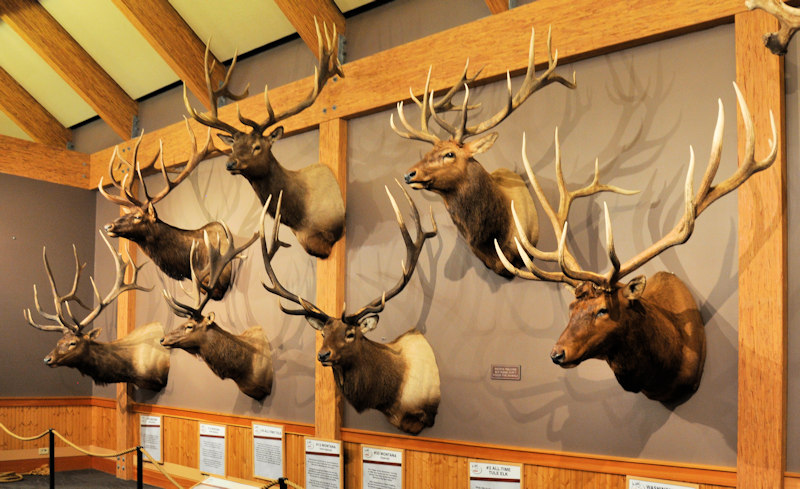
Speaking of Elk, Missoula also turns out to be the home of the Rocky Mountain Elk Foundation.  This is a national wildlife conservation society of the traditional variety.  Meaning they go to great lengths to protect and conserve Rocky Mountain Elk specifically and primarily so that they can go out and shoot them.  Their foundation center has some nice displays and information on promoting healthy elk populations but there are also a couple dozen elk heads mounted on the walls and a loop video of hunting TV programs that plays constantly.


Elk conservation, Montana style
One unexpected pleasure was that Michelle, formerly a colleague of Vicki's from her hospice organization, was moving to Seeley Lake, near Missoula, at the end of June.  We spent part of the 4th of July at the Seeley Lake parade with them and also visited Garnet Ghost Town with them.  As usually works with selling and buying property, things got delayed so we didn’t get to actually see their new “cabin”.  Hopefully next year on our way through we will be able to see it.

Seeley Lake
Seeley Lake is a lovely little town of about 500 during the off season with its very own alpine lake.  The population swells to 2 or 3 times that number during the summer.  We met some people there who live in Bozeman but own property in Seeley Lake.  They move a 5th wheel up there during the summer, invite friends with RVs to park on their parcel and enjoy their weekends & occasional full weeks there.  We don't know about hookups.  The lake has a swim beach & the day we visited was hot enough to be tempting but dogs are not allowed on the beaches of National Forest lakes and it was too hot to leave them in the car, so we walked around a bit then moved on.  The July 4th parade was a hoot. We've seen a few small town parades before and what they lack in ostentation they make up for in enthusiasm.  Every department in the city had some kind of vehicle in the proceedings, a few groups of equestrians and motorcyclists rode by and various civic organizations had trucks that threw candy to the kids and hosed down the onlookers to prevent heat stroke.  A surprising number of classic cars took part as well.  Not sure if they were locals or were snuck in from out of town.
4th of July parade in Seeley Lake.  Crack equestrian unit, local fire and police department representatives and antihyperthermia brigade

Garnet Ghost Town sits on BLM land and is supported and managed by the Garnet Preservation Association. The town was mostly settled in the 1890s by miners who were looking for gold in the local quartz. It was there, but not too concentrated and when the price of gold dropped at the start of the 20th century, it became uneconomical to mine it any more.  Fire in 1912 destroyed most of the businesses and the town largely petered out  It would probably have crumbled to dust by now, but the price of gold jumped up again in 1934 and the town had a brief revival.  The town was finally abandoned for good in the 1940s but the high, dry climate has left much of it intact.  It provides enough interest to fill a pleasant afternoon wandering through the ramshackle businesses and homes and seeing how the miners lived.
Garnet ghost town
Along Main St with hotel on the left and general store to the right
Book yourself a deluxe room at the Garnet Hotel
The Garnet residential district